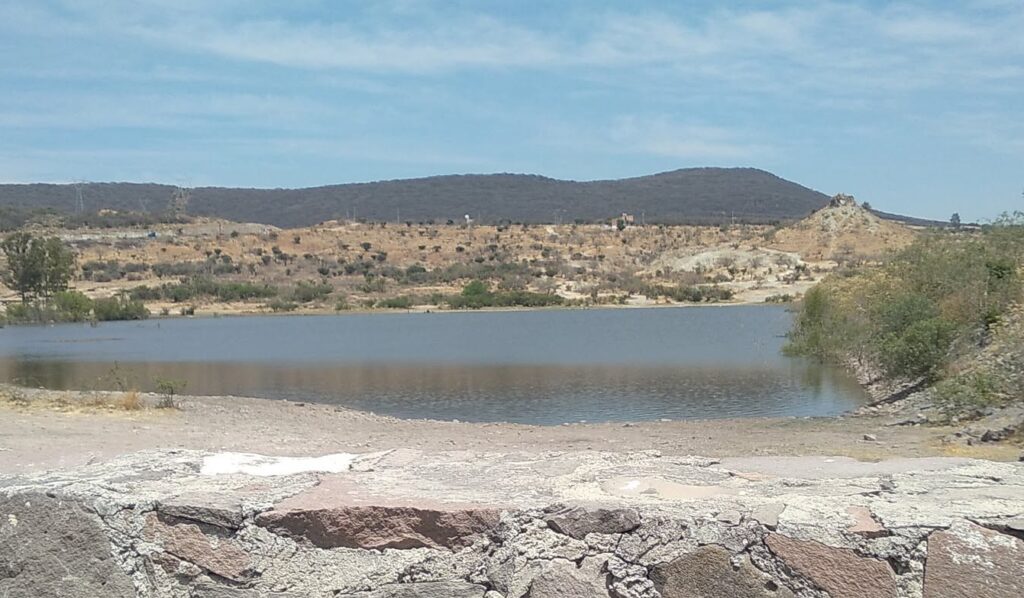
I don’t see many people on my walks to the pond, but there is an abundance of life. Donde hay agua, hay vida (where there’s water, there’s life), say many Mexicans, much more than I ever heard it in the States. That’s because water is scarce here, while in the more northern regions of North America there is no such shortage. Gringos don’t know how lucky they are.
On our twenty-minute march to the pond, the dogs and I start to notice bees floating about the bushes, stopping on sweet yellow flowers. On arrival to our destination we see white long-necked swans beating their ample wings, flying elsewhere to fish when we come too close. Ducks paddle, sheep graze, and untethered dogs pounce, but that’s another story. Once I’m sure the four canines I’m blessed to lead are safe, I unleash them, and they race away to play in the water like children— dashing here and there, charging into the water, swimming off, splashing around, and playfighting. They must look forward to these nature walks with great anticipation.
To the north, a looming monolith crowns a dusty hill. After a steep three-hundred-meter climb we rest, perched atop the enormous rock to marvel at the greenest valley for a hundred miles, with an aerial view of the sparkling pond. Even at nine in the morning, the high-desert sun threatens to cook us for breakfast, but sometimes a cooling breeze will mercifully spring to life.
The only common factor between this oasis and the rest of Querétaro’s unforgiving landscape is an astonishing quantity of beer and tequila bottles, dirty diapers, plastic bottles, empty chip bags, and other assorted rubbish—piles of it! So the question arises: Why would anyone come all the way here to rest their eyes on such a rare and refreshing spectacle, then proceed to desecrate it by refusing to clean up after themselves? Not only that, but in anger they must heave those bottles into the rippling pond, or far away into the bushes, or they’ll smash them against a tree. “Anger” is the key word here. An even better description of the negative emotions that overtake my bronze-skinned brothers and sisters might be “heartbreak.” You see, the average monthly salary in these parts is three hundred and thirty dollars, grudgingly paid in return for twelve-hour days and six-day workweeks. Both mothers and fathers leave early for work, often on the bus. So there is no irony here. Their perpetual state of deep dissatisfaction is a corollary to the undeserved glee of the wealthy. Beyond sick and tired of supporting the rich, these trash-leavers brim with hate at the inequality surrounding them. Unlike me, they don’t ever get a chance to cool off.