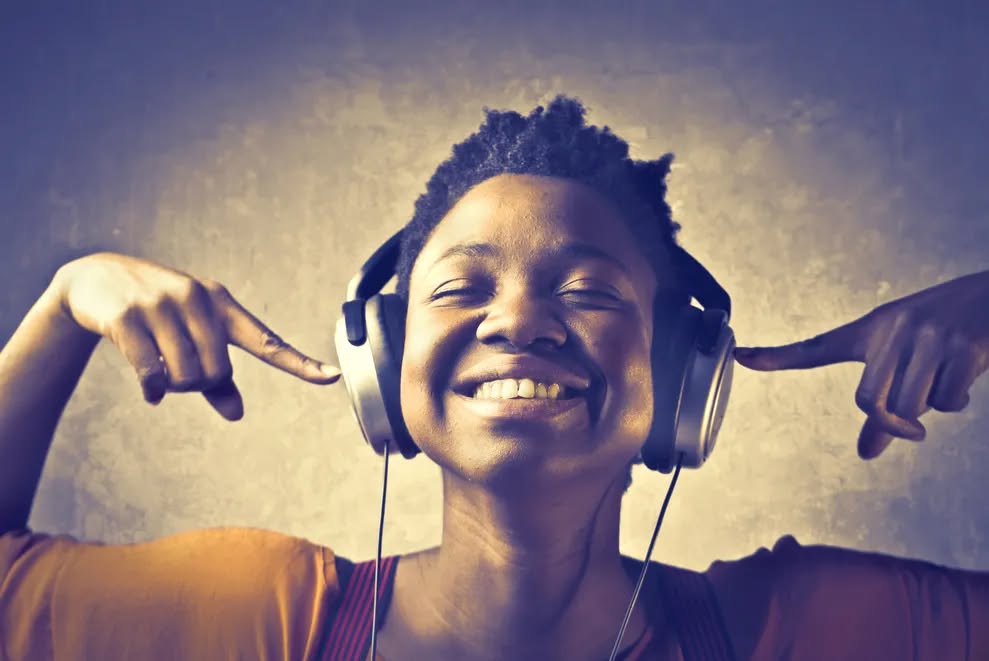
Can you remember a day that went by without music? It would be hard to do. In fact, I’d wager that within the past twenty-four hours you sang along with your favorite band, bobbed your head to a beat in the car, or swung your hips in time to a catchy tune. Even at the supermarket and at every store at the mall, there’s some lively melody playing in the background, designed to keep us in a spending mood.
“I was on a hike yesterday,” you might argue. “With no electronic device or instrument in sight.”
Ah, but that’s where you’d be wrong. Nature is even more musical than our concrete jungles are. Apparently, when you took that walk, you didn’t bask in the exquisite symphony surrounding you, which may have been composed of birdsongs, croaking frogs, or cricket legs crossing like bows on a violin. These calls and responses are primitive forms of communication and serve all sorts of evolutionary purposes.
In modern times, human music is most commonly found at celebratory or commemorative events such as weddings, funerals, birthday parties, graduations, and so forth. Why? Because it brings us together. Couples draw close in a dance, for example, and audiences may watch in awe as someone sings their heart out. We’ll see call and response between a performer and a gathered crowd—“When I say ‘Hey,’ you say ‘Ho!’” for instance—but there’s more to this phenomenon than that.
You see, we are literally born with rhythm in our hearts. So maybe music is how the universe calls out to us, and perhaps our participation in it is how we reassure our maker that we’ve heard his and her cry. Hence, the power of song to bring us together; we all spring from the same source, whose language is more closely tied to music than to speech.